Do I Need to Match the Mirror Metal to My Other Bathroom Metals?
When remodeling or designing a bathroom, one common question homeowners and designers alike wrestle with is whether the mirror’s metal finish should match the other metals in the space. Should your mirror frame finish line up perfectly with your brass faucets or matte black sconces? Or can you hold bathroom metals to just one or two finishes and let the mirror play a different role?
Drawing on best practices from the National Kitchen & Bath Association (NKBA), insights from lighting leaders like Golden Lighting and Lumens, and practical input from glaziers and electricians who install mirrors daily, this article will guide you through making smart, functional, and stylish decisions about mirror metal finishes in the bathroom.
Why Mirror Metal Matters Less Than You Think — And Your Lighting Matters More
Mirrors are often treated as decorative afterthoughts, but they’re essentially one of the most functional pieces in a bathroom. The type of mirror you choose — including shape, mounting, lighting, and storage options — impacts usability far more than whether the metal matches your other fixtures.
Mirror Types: More Than Just the Frame Finish
- Frameless mirrors: Sleek, modern, and versatile, they avoid the whole metal matching debate entirely.
- Framed mirrors: Here, the mirror frame finish comes into play—but the frame should complement the overall design rather than compete with fixtures.
- Storage mirrors: Medicine cabinets with mirrored doors add function without stressing the finish.
- Mounted and hanging styles: Wall-mounted mirrors require precise installation by a glazier to ensure flatness and stability. This practicality trumps metal matching considerations.
- LED and lighted mirrors: Increasingly popular, these require coordination with your electrician for hardwired feeds and can incorporate dimming. Lighting quality here vastly outweighs matching metal finishes.
Bottom line: Hold bathroom metals to one or two finishes overall and let functional needs lead mirror choice.
Sizing and Placement: How Mirror Width Relates to Lighting Layout
Before obsessing over metal finishes, nail sizing and placement. The NKBA recommends sizing vanity mirrors so they are as wide as or slightly narrower than the vanity itself. This is basic, but very important.
Why Size Matters for Sconce Placement
Oversized mirrors tend to crowd out wall sconces or vanities lights. When sconces are flanking the mirror, you need a gap of at least 4–6 inches of clearance from the mirror edge to the sconce centerline. This prevents the mirror frame or glass edge from visually interfering with the lighting fixture.

 Proper mirror width and sconce placement provides balanced lighting and aesthetic harmony.
 Golden Lighting and Lumens sales reps frequently emphasize that mirror sizing affects lighting effectiveness more so than metal finish coordination. Choose lighting first, then mirror width second.
Mirror Height and Mounting Standards
Standard mirror mounting heights start at about 40” from the floor to the bottom edge of the mirror, roughly aligning with common vanity heights of 32-36”. Adjust for your users’ height, but always maintain at least 72” from floor to mirror top to accommodate taller users.
For mirrors with integrated or edge-lit LEDs, confirm feed locations with your electrician ahead of time. LED mirrors are no place to improvise connections — and your electrician also needs to know whether you want hardwired dimmable controls included.
Balancing Task Lighting vs Ambient Lighting in Bathroom Mirror Choices
When lighting a bathroom mirror, think of two layers:
- Task lighting: Bright, glare-free light at face level, typically provided by sconces or vertical light bars flanking the mirror.
- Ambient lighting: General room light that supports the task layer, often ceiling-mounted or recessed.
The NKBA strongly recommends vertical sources on either side of the mirror for true task lighting over above-mirror or ceiling fixtures that cast unflattering shadows. And again, mirror frame finish does not dictate lighting style here.
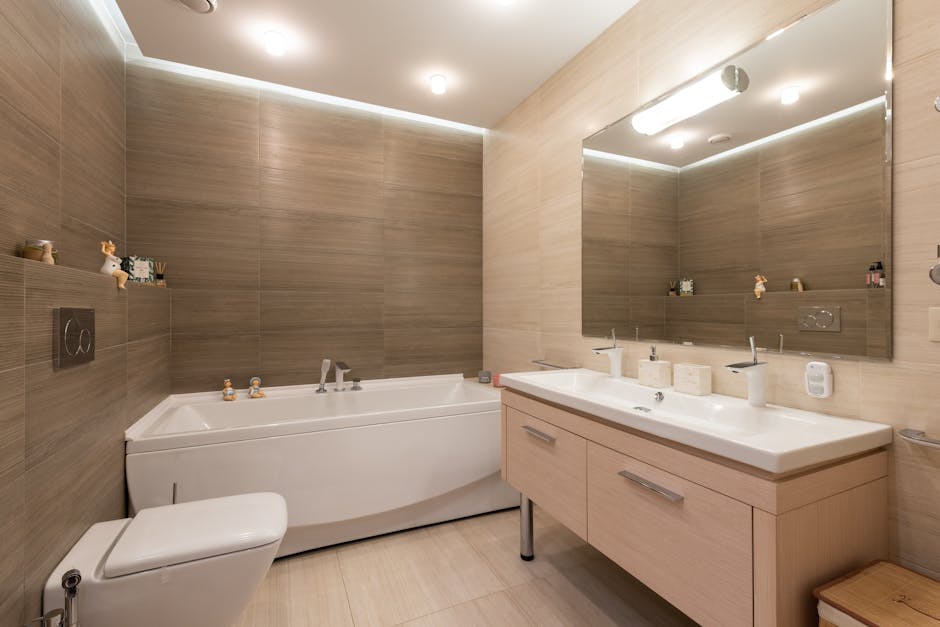
In fact, a popular strategy is to opt for matte black or brushed nickel fixtures for sconces and faucets, then choose a mirror with either a frameless edge or a neutral black metal frame that won’t visually compete. By holding bathroom metals architecturelab.net to one or two finishes and allowing the mirror style to serve lighting needs, you maximize function.
Brass vs Matte Black Fixtures: Making Metal Choices That Work
Two of the most common metal finishes in modern bathrooms are warm brass and cool matte black. Should your mirror frame finish be brass or matte black to match?
Here’s the verdict:
- Brass fixtures: If lush brass faucets and cabinet pulls dominate, a brass mirror frame can elevate the design, but the mirror must have protection against humidity to avoid tarnishing. Demister pads behind the mirror glass and sealed frame edges are non-negotiable.
- Matte black fixtures: Versatile and trendy, but avoid mirrors with distressed or glossy black frames next to matte black fixtures to prevent clashing textures. A simple black aluminum frame usually works best.
- Mixing metal finishes: Experts at Lumens point out that mixing one accent metal with a primary finish is perfectly fine and often stylish. For example, matte black fixtures with a slim brass mirror frame bring warmth without overwhelming.
- Demister pads: Whether brass or black, mirrors in humid bathrooms should be hardwired with a demister to prevent fogging. This is a job for your electrician who can add feeds during initial wiring.
Installation: Consulting Your Glazier and Electrician for Best Results
Regardless of finish, functional mirror installation is critical. Here’s where professionals come in:
- Glazier: Mirrors require precise templating and glass cutting to size, as well as safe post-installation mounting. Frameless and plate glass mirrors demand flat wall surfaces and sturdy attachment hardware. Your glazier ensures the mirror fits perfectly and safely.
- Electrician: For LED mirrors, demister pads, or integrated lighting, the electrician coordinates wiring and switch placement. Front-lit mirrors with hardwired LEDs need recess or junction boxes installed prior to mirror mounting.
Coordinate early on so mirror metal choices integrate seamlessly with functional electrical and mounting requirements.
Summary Checklist: Making Your Mirror Metal Finish Work for Your Bathroom
Consideration Guidance Number of metal finishes Hold bathroom to one or two metals; avoid more than two for cohesion Mirror frame finish Choose based on overall bathroom finish palette; allow functional needs (lighting/mounting) to take priority Lighting location Determine sconces/LED lighting layout first before sizing mirror width Mirror size Mirror width ≤ vanity width; allow 4–6” clearance between mirror edge and sconces Mirror height Bottom mirror edge ~40” from floor; adjust based on user height and vanity height Mirror lighting Task lighting prioritized with well-placed sconces or built-in LEDs; ambient lighting complements Humidity protection Demister pads and sealed frames essential, especially for brass finishes Installation professionals Glazier for templating and mounting; electrician for wiring LED mirrors and demistersFinal Verdict
Demister yes. Dashboard maybe. In other words, prioritize moisture-resistant features and lighting layout over obsessing about matching your mirror metal exactly to other bathroom metals. Hold bathroom metals to one or two finishes for simplicity and cohesion. Let your mirror frame finish support, not steal, the spotlight. Work closely with your glazier and electrician early on to ensure your mirror’s functional install and lighting balance shine through.
By focusing first on function and lighting, you’ll make choices that look timeless and perform flawlessly, rather than chasing fleeting trends or fixating on metal finishes alone.