Does Harvard Business Review Say Office Design Affects Performance?
In recent years, office design has become a focal point for businesses aiming to boost productivity, employee engagement, and overall performance. This interest has only intensified in the wake of the hybrid work revolution, which has reshaped how organizations think about physical workspaces. Notably, the Harvard Business Review has published valuable insights on how thoughtful office design can influence workplace outcomes.
In this blog post, we'll explore what the Harvard Business Review says about office design and performance, review key themes such as hybrid work, flexible layouts, real-workflow based design, and the balance between collaboration and privacy. Expect practical takeaways, supported by the experience of companies like Lum Chang Brandsbridge, a leader in commercial fit-outs, entwined with current research on employee engagement and collaboration. Plus, we'll show examples using images hosted via the Squarespace CDN to visualize flexible work environments.
Understanding the Link: Harvard Business Review Office Design Insights
The Harvard Business Review (HBR) is a globally respected source for management research. It emphasizes that office design is not just about aesthetics—it's a strategic tool that directly impacts employee behavior, motivation, and performance. Studies reviewed by HBR indicate that poorly designed workspaces can diminish focus and creativity, while thoughtfully designed spaces energize teams and foster innovation.
Central to HBR’s argument is that the traditional “one-size-fits-all” office is outdated, especially in a hybrid work environment where employees split time between home and the office. Instead, they advocate for adaptive workplaces that reflect the diverse activities employees engage in, from deep-focus work lorddecor to collaborative brainstorming.
Key Points from Harvard Business Review on Office Design
- Design impacts employee engagement: Spaces that support comfort and autonomy improve motivation and reduce absenteeism.
- Collaboration thrives in versatile environments: Different teams require different kinds of settings to communicate effectively.
- Privacy and focus zones are essential: Balancing open areas with quiet rooms helps meet varied work styles.
- Data-driven design: Using observation and employee feedback leads to smarter office layouts that align with real workflows.

Hybrid Work and Changing Expectations
The shift toward hybrid work drastically changed workplace priorities. Employees and employers alike seek flexibility, autonomy, and purpose-driven office visits. According to HBR, office design can support these new expectations by creating environments that invite collaboration without mandating presence.
Lum Chang Brandsbridge, a market leader specializing in commercial fit-outs and office upgrades, has observed many companies adopting multi-zoned workspaces that accommodate a blend of in-person and virtual collaboration. For example, break-out areas equipped with video-conferencing technology encourage spontaneous teamwork even for remote participants.
How Hybrid Work Shapes Design
- Focus Zones: Quiet zones for employees to complete concentrated tasks when in-office.
- Social and Collaboration Spaces: Informal lounges and meeting pods to foster creativity.
- Technology-Enabled Hot Desks: Easily bookable desks facilitate hot-desking common in hybrid setups.
- Health and Safety: Spacious layouts and ventilation to ensure well-being.
These adaptations demonstrate a clear alignment between employee needs, business goals, and COVID-era realities, reflecting the dynamic insights found in HBR’s collaboration research.
Flexible Layouts and Multi-Purpose Zones
HBR emphasizes that flexibility in office design not only accommodates different work modes but also future-proofs spaces against evolving trends. Modular furniture, movable partitions, and adaptable lighting make it easier to repurpose areas for various functions, from individual productivity to large group sessions.
Lum Chang Brandsbridge has been at the forefront of integrating flexible design elements to meet this demand. Their projects regularly incorporate:
- Adjustable height desks and ergonomic seating
- Multipurpose meeting rooms with movable walls
- Quiet pods adjacent to active collaboration zones
- Technology-rich spaces supporting seamless transitions between work types

Such design schemes reflect the Harvard Business Review office design principles, maximizing utility while improving employee engagement by giving workers control over their physical environment.
Design Based on Real Workflows
One of the strongest recommendations from HBR is that office design should be grounded in an understanding of how work actually happens. This means observing teams in action, gathering feedback, and tailoring spaces to fit the natural rhythms and processes of the organization.
Lum Chang Brandsbridge often uses workflow analysis and collaboration research as part of their design approach, enabling customized solutions that enhance communication, reduce friction, and speed up decision-making.
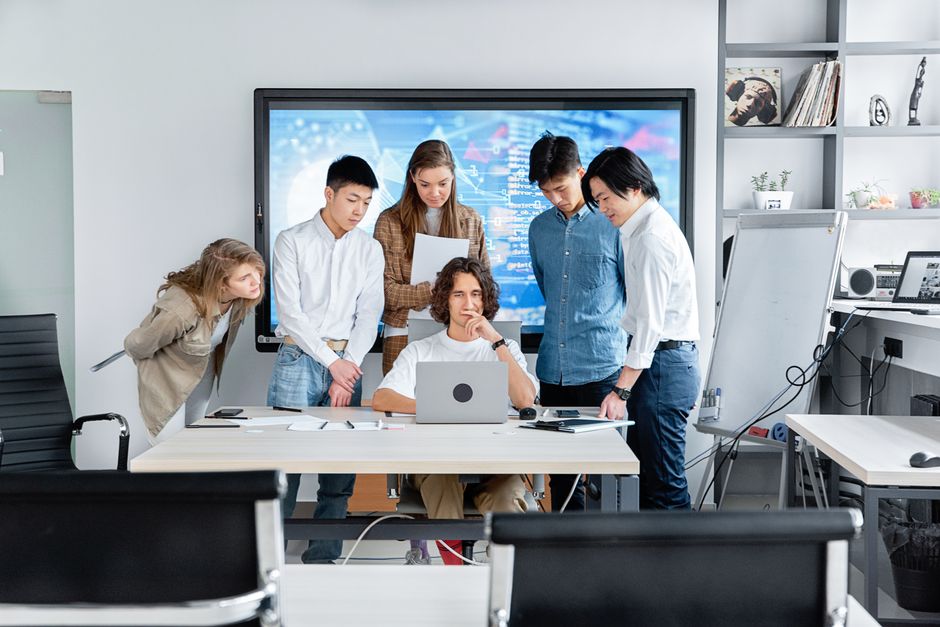
Steps to Design for Real Workflows
- Conduct ethnographic studies: Watch how employees move, interact, and use the space.
- Interview teams: Get qualitative data on preferences and pain points.
- Create activity-based zones: Group spaces by the type of work—collaborative, focused, social.
- Incorporate technology: Support workflows with tools like video conferencing and task management displays.
This workflow-centric approach aligns with findings highlighted in the Harvard Business Review office design articles, proving that employee engagement improves when design is purposeful rather than arbitrary.
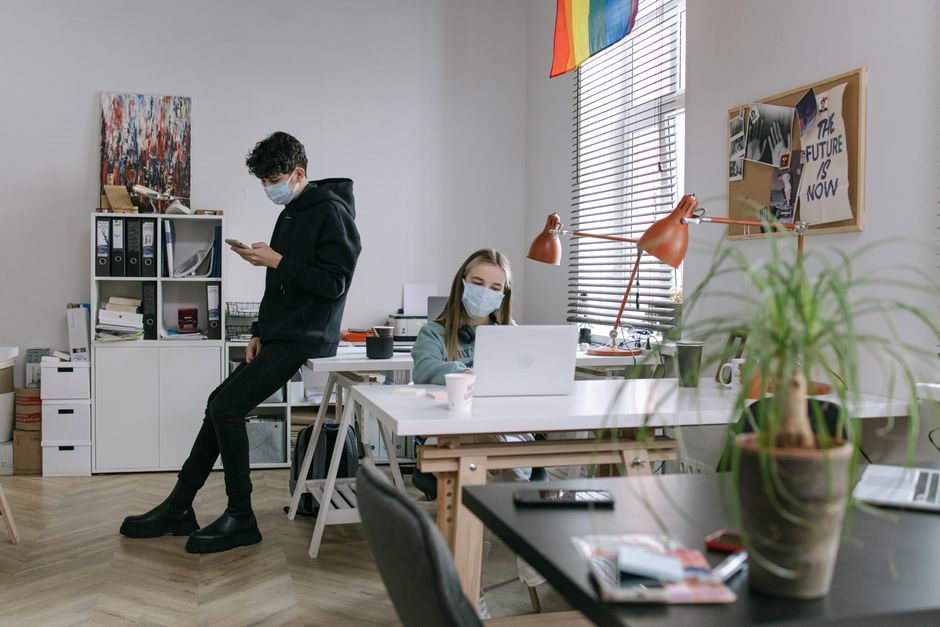
Collaboration vs Privacy Balance
Balancing open and private spaces is a persistent challenge that HBR identifies as critical for productivity. Open layouts fuel spontaneous interactions and team synergy, but excessive openness can cause distraction and stress, undermining performance.
The solution is hybrid zoning—providing quiet rooms, phone booths, and noise-mitigated workstations near collaborative hubs. This ensures employees can switch environments depending on their task or mood.
Lum Chang Brandsbridge has delivered numerous offices where this balance is engineered meticulously. Acoustic panels, sound masking systems, and strategic layouts serve as key tools.
Tips to Achieve Collaboration-Privacy Balance
Design Principle Implementation Benefit Zoning Separate quiet zones and open areas with clear signage Employees choose environments suiting task needs Sound Management Use acoustic panels, white noise machines, and carpeting Reduces distractions, enhances concentration Varied Seating Provide both communal tables and individual desks Facilitates both teamwork and independent focus Technology Integration Incorporate video booths and collaboration screens Supports virtual and in-person collaboration seamlesslyConclusion: Design Matters More Than Ever
Based on insights from the Harvard Business Review and industry leaders like Lum Chang Brandsbridge, it’s clear that office design significantly affects employee performance and engagement. Especially in a hybrid work era, investing in flexible, workflow-aligned spaces that balance collaboration and privacy fosters a culture of innovation and well-being.
As organizations continue to evolve, their offices must do the same — incorporating data-driven strategies with adaptable designs. For businesses willing to rethink their spaces, the payoff is substantial: enhanced collaboration, happier employees, and improved productivity.
If you're considering an office upgrade or redesign, prioritize these proven themes and consider partnering with experts who understand the nuances of modern workplace design.
For further learning, explore Harvard Business Review’s collection of office design articles and see how leading fit-out firms like Lum Chang Brandsbridge bring these concepts to life with cutting-edge tools and layouts.